Auto Stopping| Inspection Triangle Part 4
 This blog series reviews how service centers and auto technicians view the Auto Inspection Triangle concept. An Auto Inspection Triangle focuses on three aspects of your vehicle that work together. The legs of the Auto Inspection Triangle are called Stability, Steering, and Stopping. The final blog of this series (part 4) discusses how your vehicle’s brake pads & other braking system components facilitate auto stopping within the Inspection Triangle concept.
What Is Auto Stopping?
The stopping side of the Auto Inspection Triangle focuses on the components that work together to regulate speed and stop vehicle momentum. The braking system, suspension, and tires work together to stop your car successfully. When one or more of these components is worn out or damaged, the auto stopping leg of the triangle is compromised.
Braking System Components
A vehicle’s braking system allows the driver to reduce speed or stop in a safe and consistent manner. The brakes convert kinetic energy (wheel movement) into thermal (or heat) energy. Most modern automobiles use power-assisted brake systems, which amplify the force drivers apply to the brake pedal. Therefore, you only need to apply a little bit of pressure to the brake pedal to slow down your vehicle. Common braking system components include:
Brake Pedal
Drivers can find the brake pedal right next to the gas pedal, and use it to slow down or stop their vehicle. Essentially, the brake pedal connects drivers to the rest of the braking system.
Brake Pads or Brake Shoes
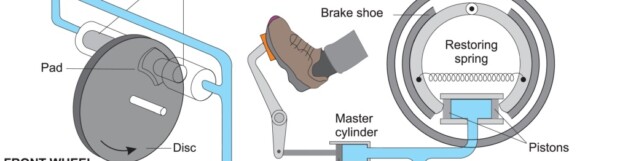
Brake pads create friction when they rub against the rotating brake disc or rotor. They contain a variety of different materials, which affect their effectiveness and longevity.
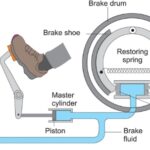
Brake shoes also create friction, but they work a little differently from brake pads. Brake shoes are generally longer and curved to push against the inside of the brake drum.
Rotors or Drum
Each wheel contains a flat disc or rotor made of cast iron that rotates with the wheel. Some vehicles have rotors with vents to enhance brake cooling. When the driver engages the brake pedal, the brake pads press against this flat disc.
In modern vehicles, drum brakes are less common, but some manufacturers still install them on the rear wheels of some cars. The brake drum spins with the wheel, and when the driver applies the brake pedal, the brake shoe pushes against the inside of the drum. The friction of the brake shoe against the brake drum creates friction to slow down wheel rotation.
Calipers
Brake calipers are like clamps that press the brake pads against the brake rotor using hydraulic pressure. When you engage the brakes, the master cylinder moves pressurized brake fluid into the pistons of the brake calipers.
Brake Fluid
Brake fluid is a type of hydraulic fluid. It is hygroscopic, which means it absorbs moisture or water molecules. Since water can cause corrosion within the braking system, make sure to check the brake fluid level periodically. If the fluid levels are low, look for a leak and schedule a diagnostic inspection right away. Brake fluid does not get used up like engine oil, so low fluid levels indicate a problem and can affect your vehicle’s auto stopping ability.
Troubleshooting Brake Issues
Your vehicle’s braking system is crucial for safety – both for the motorist, their passengers, and other cars on the road. Brake issues can show themselves in many ways. Stay aware of changes in your car’s behavior. Does it take longer to stop, or do you need to press the brake pedal harder? Does your car squeal, shake, or vibrate when braking hard? These signs indicate that your vehicle needs immediate brake service to restore adequate auto stopping. Let’s review some common brake issues:
- Brake pedal feels mushy: Could be low brake fluid or air in the brake lines due to a leak or compromised fluid.
- Brake pedal is hard to push: The power-assist components may be malfunctioning, or a brake caliper may be seized.
- Brakes lock up or won’t disengage: Corrosion or rust within the braking system components is often responsible for brakes getting stuck while engaged.
- Noisy Brakes: If you hear a loud, squealing, or grinding noise when you apply the brakes, it indicates worn brake pads (or brake shoes). Squealing indicates worn brake pads, but grinding means the pads are beyond worn and now dangerously ineffective.
- Shaking or vibrating while braking: If your vehicle or steering wheel shakes, shimmies, or vibrates during braking, the rotors may be damaged or the brake pads glazed.
- Burning smell or smoke: If you notice a burned smell or see smoke from the wheel area when applying the brakes, there is a malfunction causing the system to overheat. It may be worn components, stuck calipers, or damaged rotors.
- Leaking Fluid: If you see dark fluid under your car near the wheels, or there are streaks on the wheels themselves, it may be leaking brake fluid. Since brake fluid is highly corrosive and can damage paint and other metal coatings, it’s important to schedule a diagnostic appointment right away. Additionally, low brake fluid levels can cause complete brake failure while driving, compromising vehicle safety.
Auto Stopping Inspection in Midland, MI
Hopefully, this blog series has helped you understand how the Auto Inspection Triangle concept works and why it is vital to maintain the systems within it. Your owner’s manual contains recommended service intervals to help keep you on track. If you have any concerns about your vehicle’s braking system, visit All A’s Automotive in Midland, MI. Our experienced service technicians will inspect your brake pads, brake shoes, and other components to optimize auto stopping.
Schedule Braking System Service
Call us at (989) 631-4672 or visit our website to schedule your next braking system appointment.
Previous Inspection Triangle Blogs
Part 1: Auto Inspection Triangle Part 1 | Overview
Part 2: Auto Stability | Inspection Triangle Part 2
Part 3: Auto Steering | Inspection Triangle Part 3
Posted in: Brakes
Leave a Comment (0) ↓